AI Everything
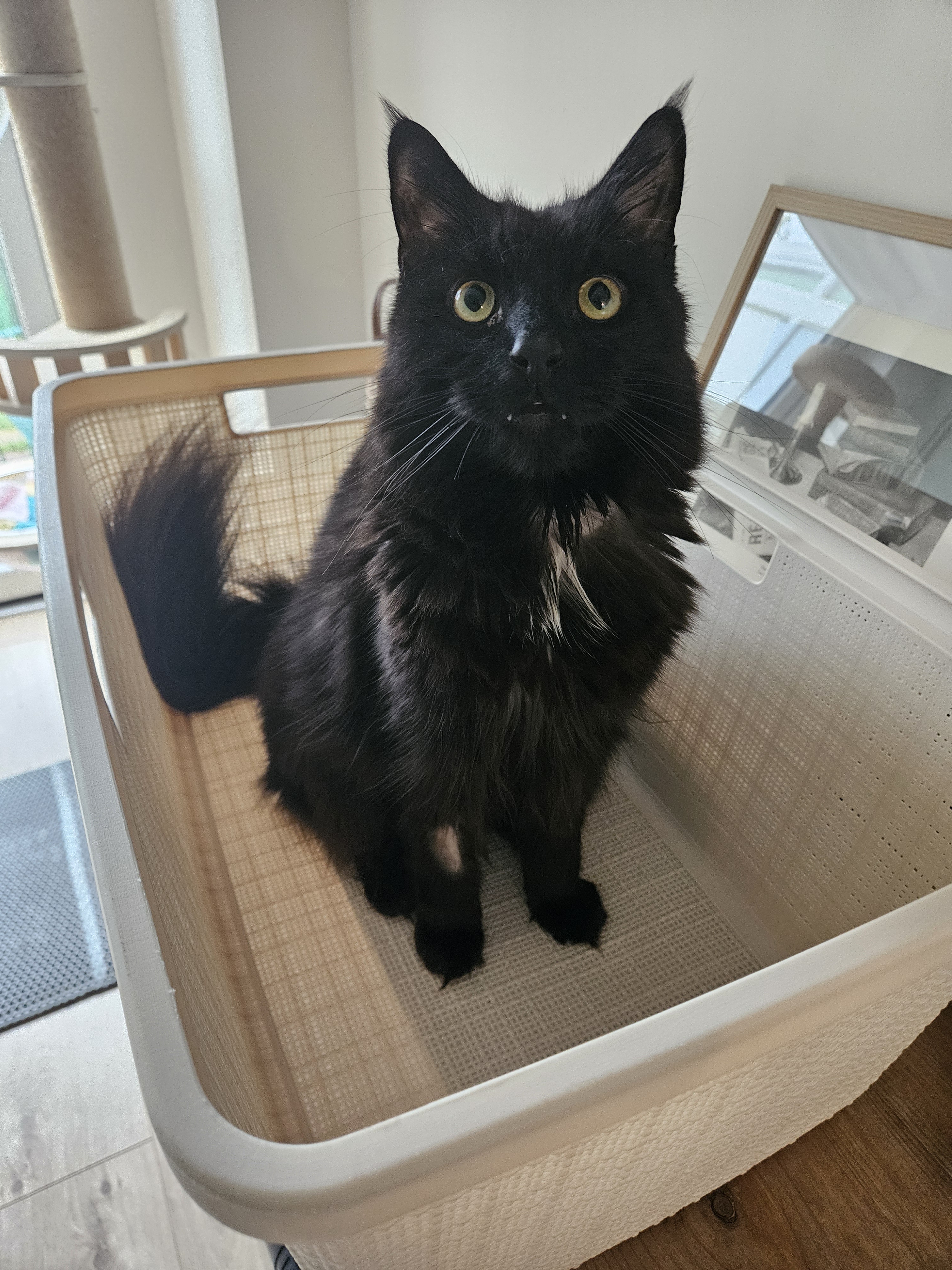
One of my cats died recently. 4 year old boy, which I believe was the result of irresponsible and unethical breeding of Maine Coons. No one knew his age correctly when we adopted him about two years ago, but we were told he was one to two years old. He was the skinniest cat when we adopted him, and he went from 4 kilos to 6 in a matter of weeks after finally eating a high-protein diet.
Shortly after that, even though he gained a lot of weight and reached his normal body weight, we found out that he had dental problems, gum disease, a heart murmur and, finally, chronic kidney disease at this very young age. Considering the unusual genetic traits, the vets simply associated all of these issues with bad genes. At this point, I sometimes think it was a miracle that he lived this long, probably thanks to KatKin and its full-meat cat food. Or maybe that is just what I tell myself, and the reality is different.
And to be honest, I always thought he was a happy cat and had no issues. I only took him to the vet for his dental problems, which then uncovered CKD (chronic kidney disease). How could that be? He was eating, drinking and peeing well and showed no obvious signs. Oh yes, he was drinking too well. In fact, far more than an average cat, because, guess what, his kidneys could not concentrate fluids, so he was in a constant state of thirst. And he had been this way since we adopted him two years ago. Why didn’t I ask AI why this cat was drinking and peeing so much? I just assumed it must be due to his “Maine Coon genes”.
Whatever. Now that we had identified late stage 3 CKD, at least we could try to manage the disease and slow its progression. I was sure he would live at least another year or so before things started getting worse. So we began the treatment and maintenance steps recommended by the vet. And then, immediately the next day, Lucky crashed and started showing clear symptoms of CKD. This happened in November 2025, and it took a whole week of IV fluids and anti-nausea drugs to get him back to his “previous” state. We stopped all CKD treatment. The vet suggested starting again later, but much more slowly, adding drugs and diet changes one by one until we were sure his body could accept the changes.
After this incident, Lucky actually started showing early-stage CKD symptoms. He was eating, but not as well as before. He also started losing weight. He was melting in front of my eyes. I restarted CKD treatment to slow the progression in January 2026. This time, he crashed the very same evening I started the treatment and passed away on the way to the vet two days later.
But the treatment was supposed to slow down the disease, not speed it up. What the hell happened in the span of two months? I thought we had at least a year with Lucky. The vet said they see this regularly with CKD, as cats do a very good job of hiding symptoms until it is extremely late. We had done everything correctly; his body was just too weak to handle even the smallest interruption. It still does not make sense to me. I need a better explanation.
I asked Gemini and provided the full treatment plan and timeline of events. The AI immediately pointed out that a specific drug in the treatment plan, Semintra, was the likely culprit. This drug should not be administered to cats with late-stage CKD, because it works by shutting down parts of the kidney responsible for protein filtration. The idea is essentially to accept more long-term blood toxicity while preventing protein loss, keeping the cat’s weight stable and thereby increasing lifespan.
This drug works wonders if, for example, kidney function is at 50%. Yes, it permanently reduces that to 40%, but at least that 40% can then be maintained long-term thanks to protein retention in the blood. But if you give this drug to a cat that only has 10% kidney function remaining, reducing that to 0% means death.
I trusted the vets.Not once, but twice. I should have asked AI about this before starting treatment. I should have asked after the November incident and at least excluded this drug in January when I restarted treatment. But I didn’t, because I trusted that they knew what they were doing. I should have asked AI from the very first day we adopted him why he drank and peed so much. But I didn’t.
Do I trust AI more than humans now? Not necessarily. Does AI hallucinate and produce garbage regularly? Yes, but so do humans. We have flawed brains. It could have been a bad day, a headache, or simple human error that led a specialist to prescribe the wrong drug. Sure, at least 4 vets saw Lucky’s treatment plan since October 2025, but they could all have had a bad day. Who knows. All I know is that I will probably no longer trust a professional in any field who does not use AI in their day-to-day work to double-check things. It should not harm your huge ego to verify your knowledge with a machine and treat it as a colleague who happens to have access to almost the entire body of human knowledge ever produced.
I do not write code or documentation without AI anymore. I do not even trust companies that ban AI coding during interviews. What is the point? I can produce world-class engineering code using my English now. Is it dangerous? Can it cause incidents in production? Yes, but so can my handwritten code. It can cause massive incidents and financial damage to a company. At least it cannot kill a cat, yet. It is not AI slop; it is human-intelligence slop that created world wars, religions and Cambridge Analytica.